

ONE PLOW TRAIN. ONE WARNING SIGNAL. MEET SWS LinQ
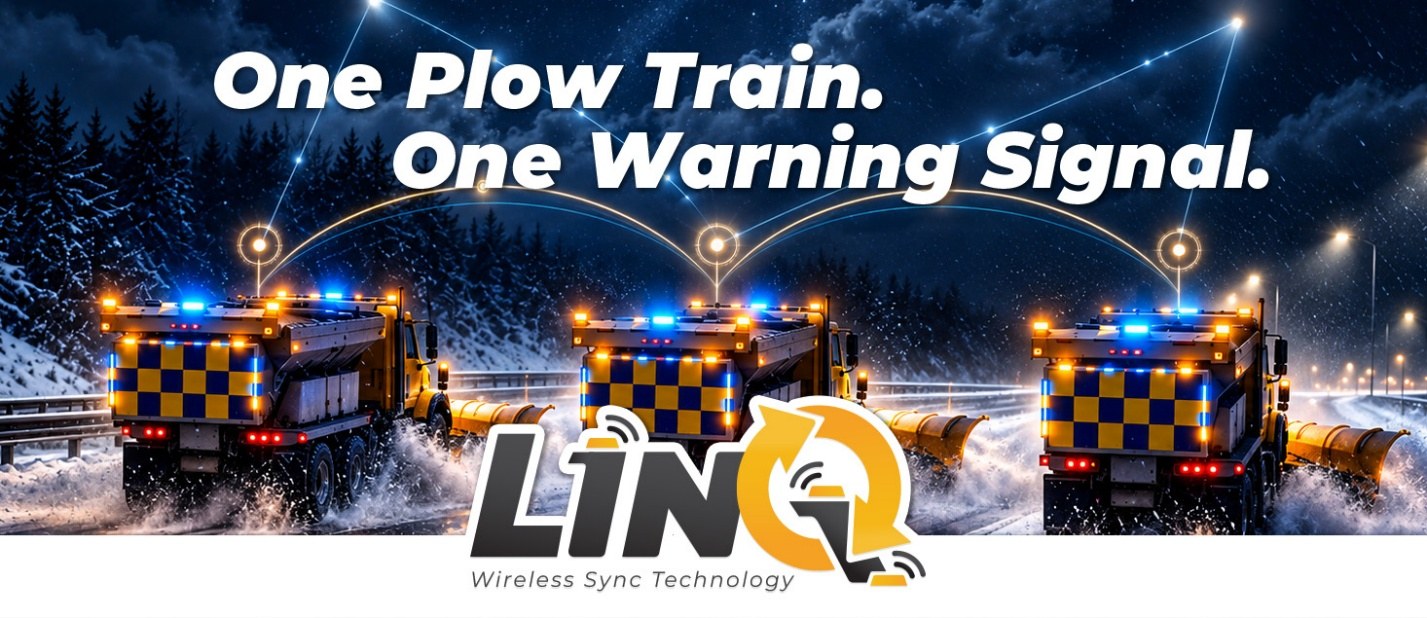
When snow plows move down a highway in echelon formation, they are working together as one operation. But to the drivers approaching from behind, their warning lights have not always looked that way.
SWS snow plow packages already synchronize the warning lights on each individual truck. The front minibar acts as the master, coordinating the other warning lights on the vehicle so they flash together.
The challenge comes when several plows work side by side.
Each truck may be synchronized on its own, but without a common timing reference, one truck can flash at a different moment than the next. From a distance, that can create several competing warning patterns instead of one clear visual message.
LinQ changes that.
Warning Lights Should Guide, Not Distract
 LinQ Wireless Sync Technology allows equipped SWS snow plows to flash together across the entire plow train.
Instead of each truck operating on its own timing, LinQ gives every equipped plow the same timing reference. The result is a unified warning pattern across the echelon, helping the entire group visually communicate as one coordinated operation.
 For everyday drivers sharing the road with a snow plow train, that creates a clearer message. Rather than seeing several trucks flashing independently, drivers see one coordinated warning signal moving across the roadway.
One plow train. One warning signal.
How Does LinQ Work?
 The idea behind LinQ is simple: give every truck the same clock.
LinQ uses GPS time to determine where each truck should be within the warning light pattern at any given moment. Because GPS time is the same for every equipped truck, each vehicle can arrive at the same flash timing independently.
The trucks do not communicate directly with one another.
There is no truck-to-truck radio, no vehicle pairing, no designated lead truck controlling the others, and no fleet programming required.
And while LinQ uses GPS time, it is important to make the distinction: LinQ is not a vehicle tracking system. It uses the GPS time signal, not the vehicle’s location, and does not record or report where a truck has travelled.
A Simple Upgrade for Installers
 New technology should not mean rebuilding an entire lighting system.
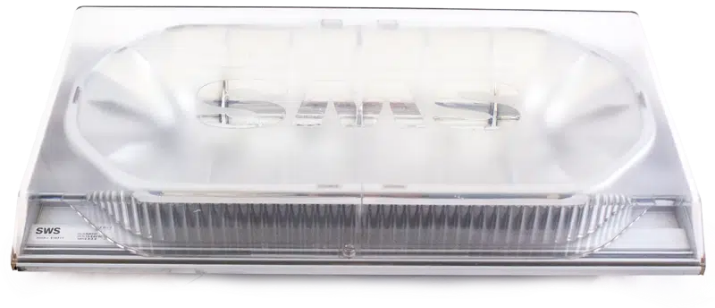
For trucks already equipped with an SWS snow plow package, adding LinQ is designed to be straightforward: replace the front TX minibar only.
The existing warning sticks, rear lighting, beacons, wiring, and other downstream components remain in place.
For installers, that means less disruption to an existing installation. There is no need to pair trucks together, commission the fleet, or install additional communication equipment between vehicles.
Change one part. The whole train agrees.
Built for the Reality of Fleet Operations
 Snow plow formations are not static.
Trucks can join a route, leave the formation, change positions, or move between crews. LinQ was designed so the synchronization does not depend on one specific truck leading the group.
Any LinQ-equipped truck can lead or leave the plow train without changing how the rest of the system operates.
Whether a fleet is running a few trucks or a much larger operation, there is no additional infrastructure required between vehicles.
There is also no subscription, airtime, base station, radio licence, or annual fee required for LinQ synchronization.
For fleet operators, that means adding coordinated visibility without adding another service, network, or ongoing cost to manage.
Nothing Extra for the Snow Plow Driver
The best technology is often the technology the operator does not have to think about.
There is no app to open. No trucks to pair. No synchronization process to complete before leaving the yard.
The operator uses the warning system as usual, while LinQ handles the timing automatically.
From a cold start, the warning lights begin operating immediately, and synchronization follows automatically once the system establishes its time reference.
That allows the driver to stay focused on the job ahead: clearing the road.
From One Truck to the Entire Plow Train
For years, SWS has coordinated warning lights within the individual snow plow.
A wired LIN network inside the truck allows the front minibar to coordinate the other warning lights on that vehicle so they operate together.
LinQ takes that same idea one step further.
Instead of connecting one light to another, it creates coordinated timing between separate trucks without physically connecting the vehicles at all.
Inside the truck, LIN. Between trucks, LinQ.
 For installers, it means a simple upgrade. For fleet operators, it means no additional system or subscription to manage. For snow plow drivers, there is nothing extra to control. And for everyone travelling behind the plow train, it means a clearer, more unified warning signal on the road.
One clock for the whole plow train.
SWS LinQ Wireless Sync Technology.
Built to keep your fleet in step.